

Our Wikipedia, material: glass
See also: Glass processing technologies | Glass cutting technologies | Structure of figurines | Gallery of glass figurines
The most important material used in our company. It is from this material that the name GLASSO came, which has rooted in the memory of our customers. Glass, thanks to its flexibility in design, is an indispensable material for creating figurines. Its transparency allows the use of any technology. It is like a blank sheet of paper on which we can create practically any design.
a) Float
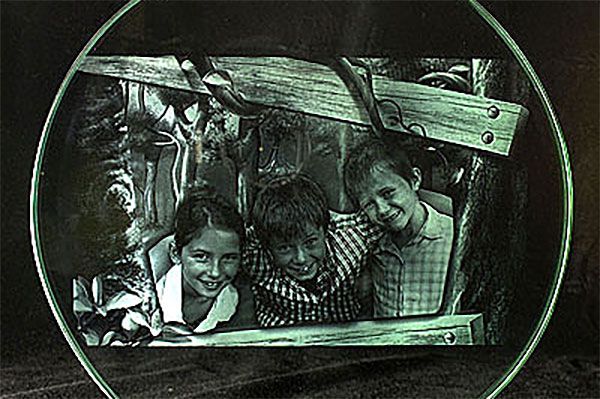
One of the more popular types of glass. It is produced in sheets of various thicknesses (up to 19mm). It is characterized by a greenish hue, mainly visible at the edges. In GLASSO, this material is not used due to its undesired greenish color.
b) Optiwhite
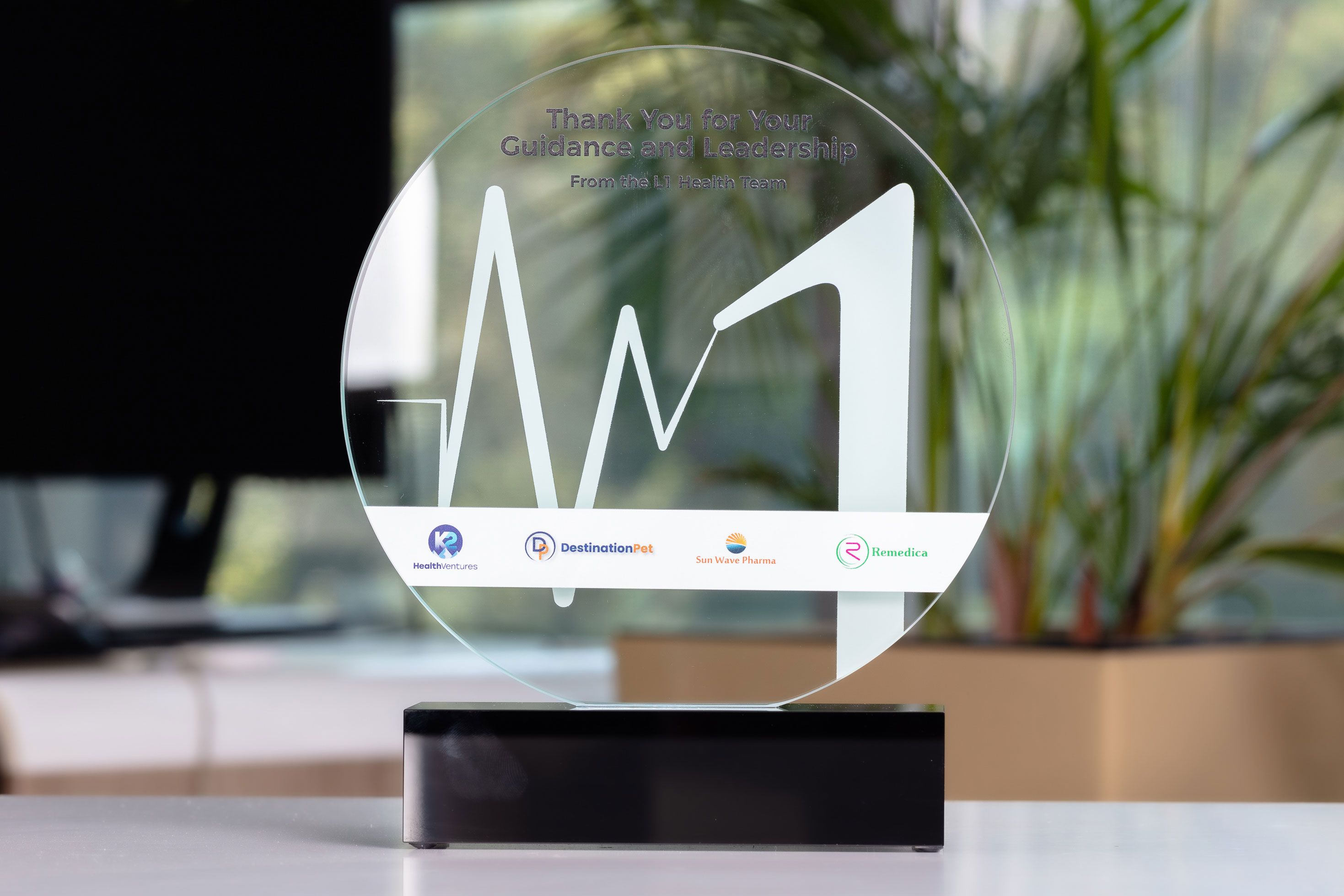
This is a type of Float glass, where the greenish hue has been almost completely eliminated. This makes it much more aesthetically pleasing, and figurines made from it are more transparent and neutral in color. Like Float glass, this glass is produced in sheets up to 19mm thick. It is more expensive than Float glass, but it is the basic material used in the production of figurines at GLASSO.
c) Optical glass (commonly known as crystal)
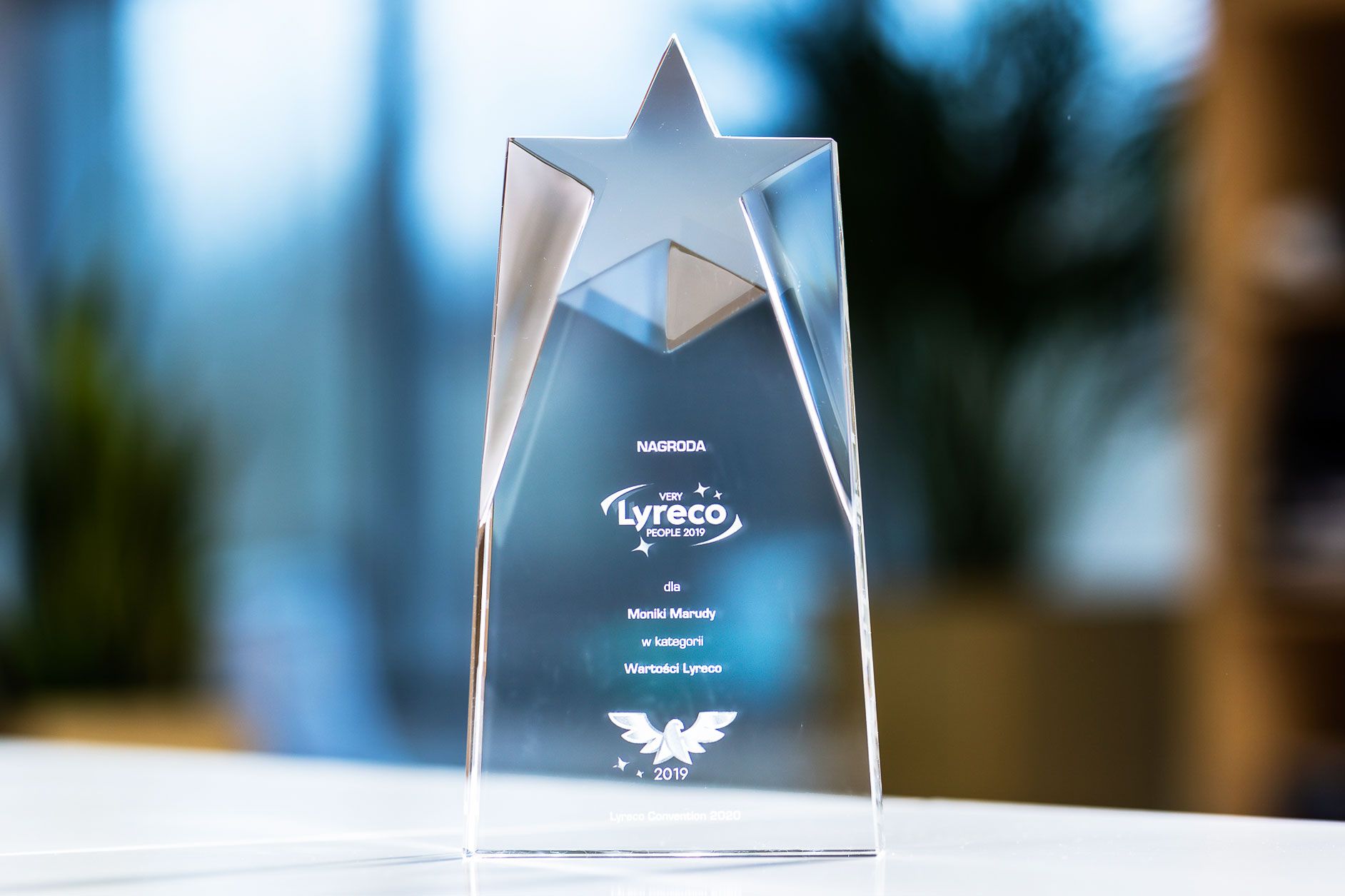
This is the purest form of glass we use in our projects for spatial objects. The transparency parameter reaches 100%. This type of glass is characterized by the absence of any shades of other colors. It is mainly used for the production of figurines thicker than 19mm intended for 3D engraving of spatial objects such as models of our clients' products. The engraving inside the crystal is clear and white. In practical applications, optical glass is used to make, among other things, microscope lenses, eyeglass lenses, etc. It is a type of glass with high quality parameters. In the case of figurines and promotional gadgets, it is commonly referred to as crystal. The most common classes of optical glass are called K5 (lower class) or K9 (highest class). What distinguishes them is the amount of impurities, the amount of air bubbles present, or the internal non-uniformity characterized by more or less visible streaks (waves) inside the glass.
d) Colored glass, tinted throughout its mass.
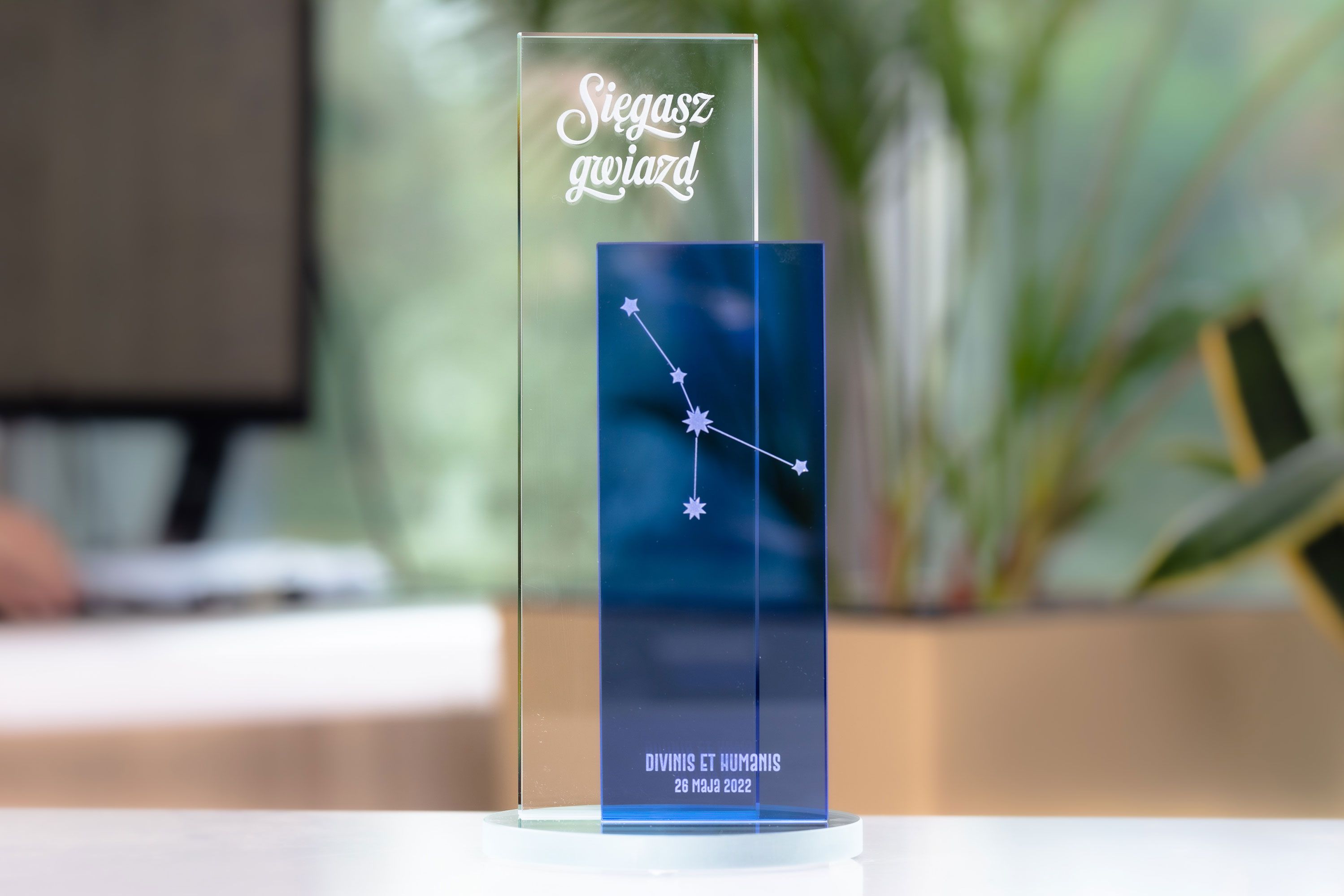
To add visual variety to our figurines, we also use colored glass. It is less versatile than clear glass due to limited marking methods (it is not possible to make a 2D or 3D internal engraving), so we use it more often as an addition to our figurines, in the form of ornaments, bases, and components. Colored glass has a limited color palette of a few basic colors. We can divide them into opaque and semi-transparent colors. We mark the surface of colored glass using:
- UV printing;
- Sandblasting with paint filling or sandblasting without paint filling
- CO2 surface engraving
e) Black glass
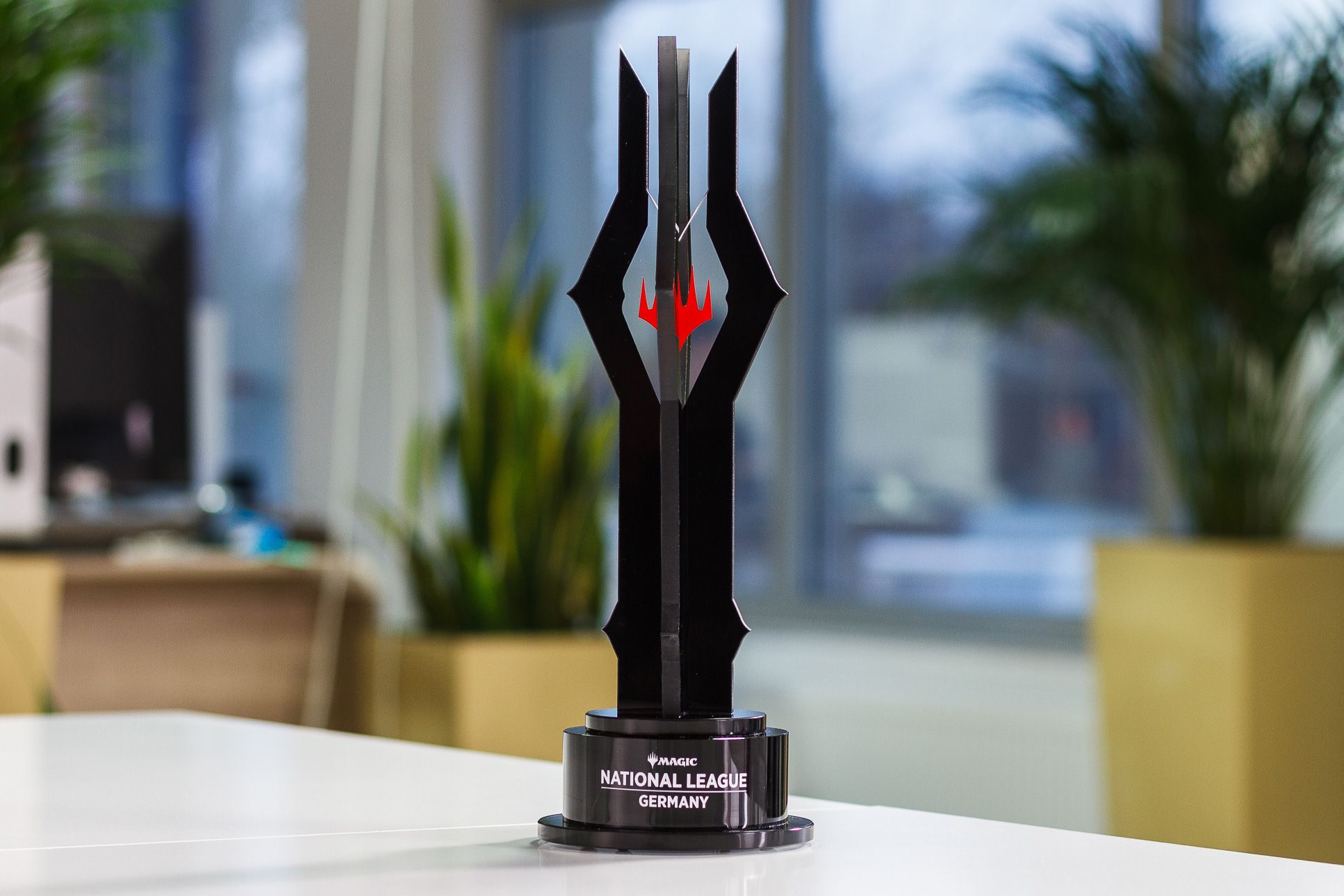
Usually, it is widely used as a material for bases, but it is also an ideal product for figurines or their components. It is glass characterized by a high gloss with deep black color. It adds gravity and elegance to the figurine. Black optical glass is one of the most expensive types of optical glass. We often use it as a base for the most exclusive figurines.